My professional journey has been shaped by two closely connected worlds: technology and business. Over the past 30 years, I have had the opportunity to work across banking, payments, risk, compliance and financial technology, holding senior leadership positions in global organizations. What has remained consistent throughout this journey is my belief that technology creates the greatest impact when it is closely connected to business strategy, customer needs and measurable outcomes.
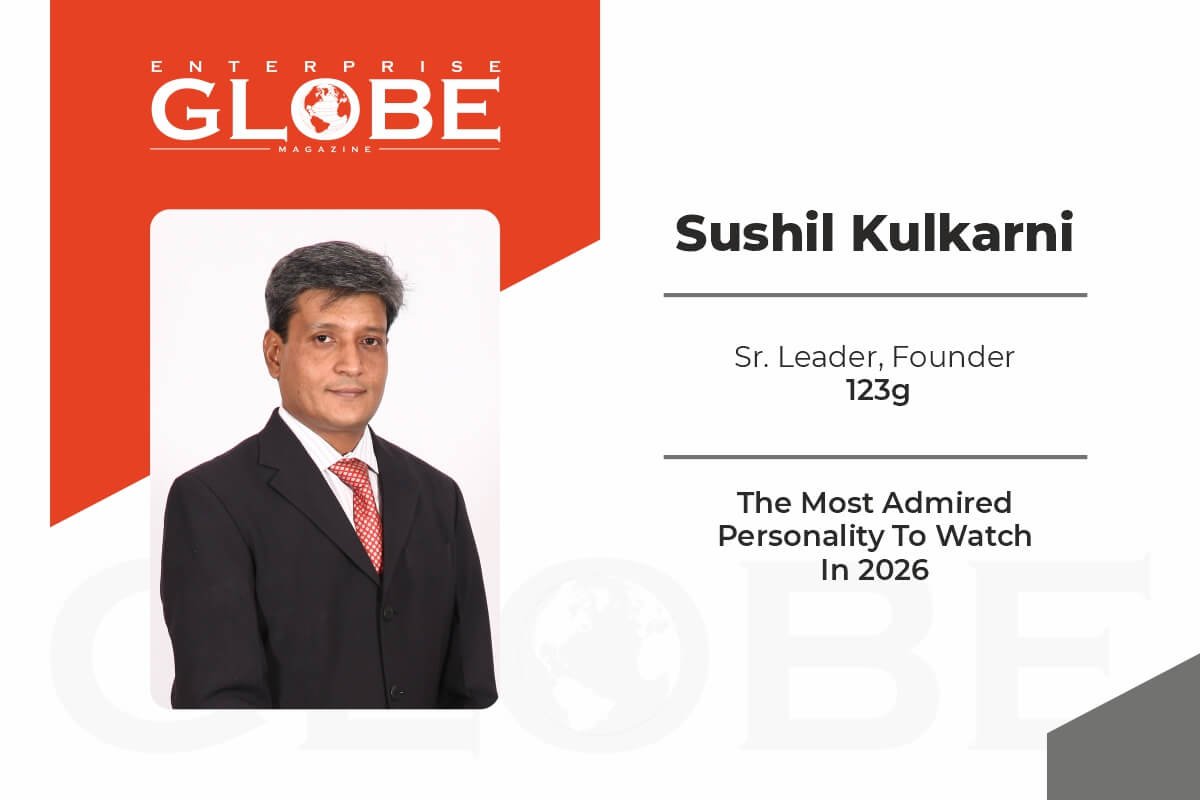
Today, one of my key roles is serving as the Founding member of India at 123G (subsidiary of 123G LLC USA). The organization operates as an operator-led network and high-growth advisory firm, working closely with PayTech, Fintech and enterprise organizations around the world. Rather than functioning simply as traditional consultants, we work as execution partners becoming deeply involved in helping organizations achieve tangible business outcomes.
As one of the Sr Leader / Founding member of India, my responsibility extends well beyond managing a business unit. I am focused on building, governing and scaling 123G’s India operations as an important growth and engineering center. My role encompasses business development, go-to-market strategy, delivery, technology advisory, P&L management, talent development and the expansion of our commercial presence across APAC, EMEA and the United States. At the same time, I remain closely involved in ensuring that our engineering and technology delivery meets demanding global standards, including SOC 2, ISO/IEC 27001, PCI DSS v4.0 and international financial compliance requirements.
Working at this level also means working closely with global C-suite leaders, founding partners, managing directors, investors and board-level risk committees. This exposure has reinforced an important lesson for me: technology and business cannot operate in isolation. Engineering priorities need to be connected to commercial objectives, capital strategies, customer expectations and long-term organizational growth.
My leadership journey began with a foundation in engineering. After completing my Bachelor of Engineering in Production Engineering, I entered the technology industry during a period of significant digital transformation. In the early stages of my career, I worked closely with customers, delivery teams and product organizations. Those experiences gradually taught me that technical expertise while essential is only one part of successful transformation.
I began to understand that a successful technology initiative needs several elements working together: a clear business strategy, a strong understanding of customer needs, disciplined execution and effective people leadership. As my responsibilities grew, I became increasingly interested in building organizations, developing talent and using technology to create meaningful business results.
Leading global teams, managing P&L responsibilities and working directly with banking clients across different geographies further shaped my leadership philosophy. Over time, I moved from thinking primarily about technology delivery to thinking about the broader business impact of every decision. Today, I believe some of the strongest leaders are those who can connect innovation with measurable business outcomes.
Several experiences have had a particularly strong influence on the way I lead.
One important chapter was my involvement with the acquisition and integration of I-flex Solutions by Oracle Corporation. Being part of such a significant organizational transition required collaboration across teams, functions and geographies. It taught me valuable lessons about change management, stakeholder alignment and the challenge of maintaining business continuity while simultaneously transforming an organization.
Another defining experience came during my leadership role at Volante Technology. When I joined the organization, it was facing significant profitability and operational challenges. Working together with the team, we helped improve business performance from approximately USD 10 million with negative margins to USD 40 million with positive margins, while also implementing substantial cost-optimization initiatives. We also strengthened the reliability of the VolPay platform, ultimately achieving 99.99% uptime through architectural and operational improvements.
My involvement in fundraising initiatives also gave me a broader understanding of the relationship between business strategy, capital, technology and growth. These experiences reinforced my belief that effective leadership requires a constant balance between people, technology, operations and commercial objectives.
My understanding of leadership has changed considerably over the years. Earlier in my career, I was primarily focused on technical delivery, operational excellence and successfully completing projects. As I moved into broader business and P&L responsibilities, I realized that sustainable success requires a much wider perspective.
Today, I see leadership as the ability to create clarity, empower people and ensure that strategy and execution remain aligned. In an increasingly digital and AI-driven business environment, leaders cannot simply direct teams from the top. They need to create an environment where talented people can make decisions, take ownership, experiment, learn and deliver results.
For me, leadership is ultimately about creating an organization where people can perform at their best, technology investments contribute to growth and the business continues to adapt as customer and market expectations change.
Three values have consistently shaped my approach to leadership: business accountability, operational excellence and people development.
Business accountability means ensuring that technology investments deliver real and measurable value. Throughout my career, I have focused on profitability, cost optimization, business growth and ensuring that engineering initiatives contribute directly to customer and organizational success.
Operational excellence is about building organizations and platforms that are scalable, resilient and efficient. Whether the challenge involves improving platform stability, managing global delivery teams or redesigning processes, I believe sustainable performance comes from strong operational foundations.
The third and perhaps most important, is people development. Strong organizations are ultimately built by strong people. I have always believed in mentoring teams, developing future leaders and creating opportunities for people to grow. Some of the achievements I value most are not necessarily financial or technological; they are the moments when I have seen individuals and teams develop the confidence and capability to take on greater responsibilities.
Building the Next Generation of Leaders
My approach to developing future leaders is based on three ideas: ownership, exposure and continuous learning.
I encourage emerging leaders to look beyond their immediate projects and understand the business context behind their decisions. Leadership develops when people are trusted with responsibility, empowered to make decisions and given ownership of outcomes.
Throughout my career, I have tried to create opportunities for high-potential professionals to lead customer engagements, take responsibility for delivery, participate in strategic initiatives and interact directly with senior stakeholders. Exposure to both the technology and business sides helps people develop a much more complete understanding of leadership.
Continuous learning is equally important. Banking and technology are changing rapidly, particularly with the growth of cloud platforms, AI/ML, data analytics and modern financial technology. Future leaders therefore need not only technical knowledge but also strong communication, commercial awareness and stakeholder-management skills.
Mentorship has played an important role throughout my own career. I have been fortunate to work with leaders who challenged me to think beyond technology and develop a deeper understanding of customers, finance, business relationships and organizational leadership.
Their guidance helped me transition from being primarily a technology professional into a broader business and operational leader. As a mentor myself, I try to provide similar opportunities to others.
During my tenure at Rolta, for example I helped build and scale an engineering and implementation organization from the ground up while developing a leadership pipeline within the team.
I believe effective mentorship is not about simply giving people answers. It is about giving them perspective, creating opportunities, asking the right questions and helping them develop the confidence to make informed decisions independently.
I also believe that diversity and inclusion are important drivers of innovation and organizational success. Having worked with global teams across different countries and cultures, I have seen how different perspectives can lead to better decisions, stronger problem-solving and more innovative solutions.
For me, creating an inclusive culture begins with giving people an equal opportunity to contribute and grow. Transparent processes, clear expectations and objective measures help create an environment where decisions are based on contribution, merit and business impact.
I also encourage collaboration across functions, disciplines and levels of experience. Some of the strongest teams I have built have brought together people with very different technical, operational and business backgrounds. When people feel respected and empowered to contribute, organizations become more resilient and innovative.
Perhaps the most important leadership lesson I have learned is simple: technology must always serve a business purpose.
Early in my career, I naturally focused on technical excellence and engineering innovation. But as I gained experience leading global banking programs, managing P&Ls and driving business growth, I came to realize that even the most sophisticated technology has limited value if it does not address a meaningful customer or business problem.
The achievements I am most proud of are therefore not defined by technical complexity alone. They are defined by outcomes improving platform reliability, increasing profitability, reducing costs, growing the business or helping customers achieve their strategic objectives.
That principle continues to guide my decisions today. Technology, people and processes must ultimately work together to create business success and customer value.
If I could give one piece of advice to my younger self, it would be: “Learn the business side as early as you learn the technology.”
Technical expertise provides a strong foundation but leadership impact comes from understanding how technology influences customers, revenue, profitability, operations and long-term strategy.
Looking back, I would have spent even more time early in my career learning about finance, sales, customer engagement, negotiations and organizational leadership. Those capabilities eventually became just as important as technical knowledge as I took on larger teams, P&L responsibilities, business-growth objectives and strategic decisions.
After more than three decades in technology and financial services, I believe that the ability to bridge technology and business has been one of the most important factors in my professional growth. It is also a capability that has become increasingly important in today’s rapidly evolving digital and AI-driven world.
Ultimately leadership is not about choosing between technology and business. It is about bringing the two together using technology intelligently, developing people thoughtfully and staying relentlessly focused on creating meaningful outcomes for customers and organizations.