
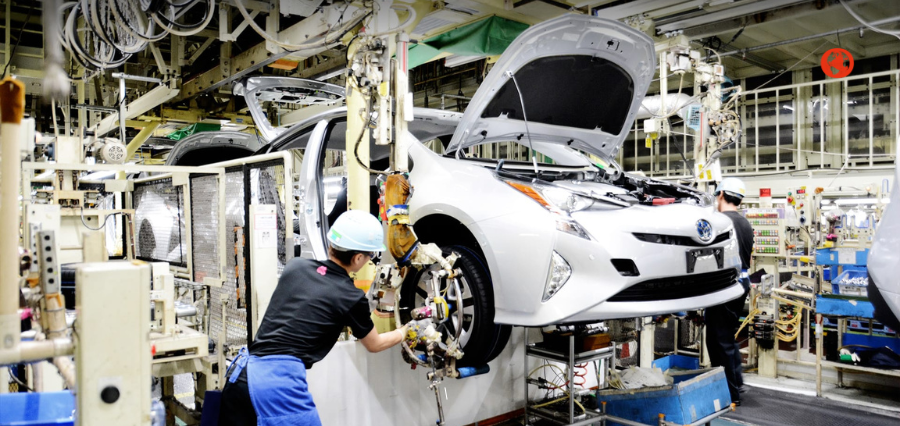
It aims to boost production of the hybrid system in various plants to meet increasing global demand.
The expansion supports the company’s long-term electrification roadmap while balancing affordability and sustainability.
Increased capacity will enhance the stability of supplies and diminish delivery delays globally.
The latest production expansion by Toyota comes when the global automobile industry is at an important juncture. With governments pushing for lower emissions and automakers racing toward electrification, Toyota has picked a diversified path that includes hybrids, EVs, plug-in hybrids, and hydrogen technologies. This multi-technology approach allowed the company to maintain strong sales across regions with varying infrastructure, energy policies, and consumer preferences.
Over the last ten years, hybrid vehicles have been one of the strongest performing categories for Toyota. With the Prius, Toyota pioneered the mass-market hybrid technology in the late 1990s, and today, hybrids make up an important fraction of Toyota’s global sales. While many competitors accelerated the switch to full electric vehicles, Toyota countered that hybrids would remain relevant for decades to come-especially in developing economies where the installation of EV charging infrastructure is limited. Recent global sales trends have vindicated this strategy, with record levels of demand for hybrids.
Another important background factor is supply-chain resilience. During the pandemic, the automotive industry faced severe disruptions, from semiconductor shortages to logistics bottlenecks. Hybrid vehicles, requiring sophisticated power control units and additional electronic components, faced especially strong headwinds. The expansion of hybrid-specific production lines will allow Toyota to move away from dependence on stretched global supply networks, further stabilizing its manufacturing ecosystem.
The expansion also aligns with Toyota’s carbon neutrality roadmap. While competitors are pushing aggressively into EVs, Toyota has argued that hybrids provide more immediate and realistic emissions reductions on a global scale. The company emphasizes that wide-scale adoption of hybrids can greatly reduce fuel consumption as EV infrastructure continues to mature. Increasing hybrid production capacity enables Toyota to supply millions of consumers with lower-emission vehicles faster than if it were reliant on EV rollouts.
Market competition factors into Toyota’s decision, too. Competitors such as Honda, Hyundai, and Ford have been expanding their hybrid lineups amid softening EV demand in some markets. Toyota wants to further fortify its standing as the global leader in hybrid technology by being in a position to supply that strong demand now being chased by competitors. The expansion cements Toyota’s position at a time when hybrids are enjoying renewed momentum.
Lastly, this move reflects Toyota’s long-term manufacturing strategy for adaptability. By upgrading plants to EV-focused production, rather than entirely new ones, Toyota is keeping operational flexibility. Such a plant, in the face of shifting conditions within the markets, can quickly adjust production mixes to keep it very responsive in tune with global transportation trends.