
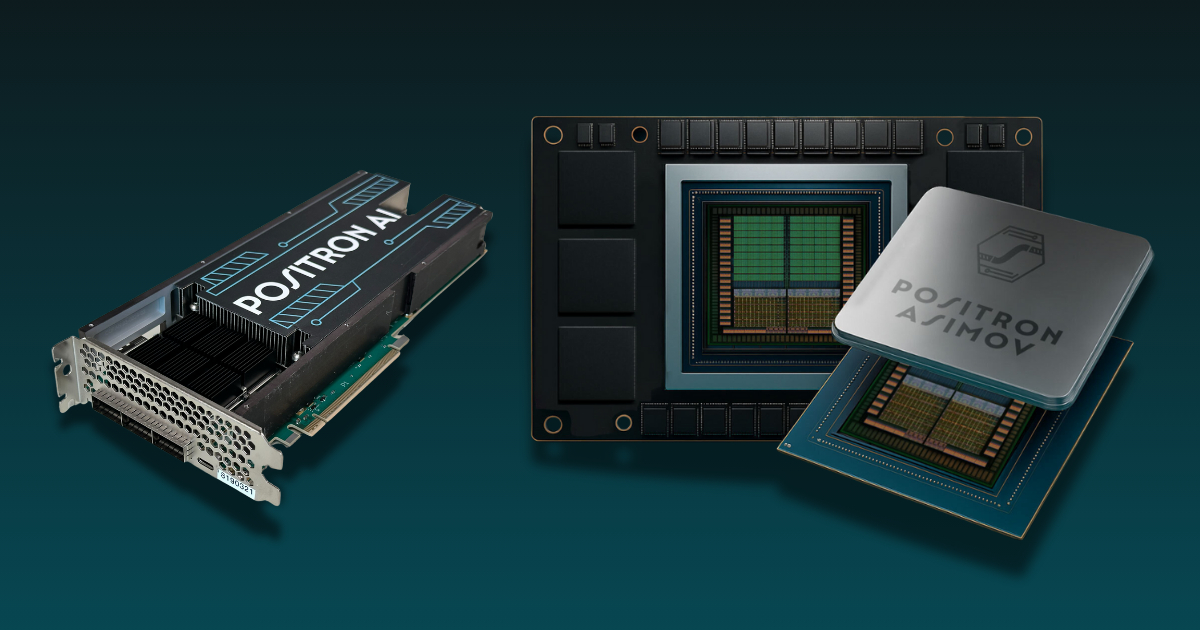
Positron Secures $230M Series B to Take on Nvidia’s AI Chips
Source Credit: TechCrunch
A New Challenger Appears in the AI Chip Wars
In an era dominated by Nvidia’s AI silicon, a fresh contender has just announced a major war chest. Positron, a stealth hardware startup, has closed a $230 million Series B funding round aimed at accelerating development of its own AI accelerator chips to compete directly with Nvidia in the most lucrative segment of the semiconductor market.
This round led by top-tier investors like Sequoia Capital and Andreessen Horowitz (a16z) reflects growing investor confidence in challengers capable of breaking up entrenched industry power.
Why This Matters: Nvidia’s Dominance and Market Opportunity
Nvidia’s GPUs have become the standard compute substrate for generative AI training and inference, powering data centers and cloud AI services globally. Its command of the high-performance computing space has also led to increasing costs and supply concentration.
Positron’s new funding signals two major trends:
- Investor appetite for AI hardware diversification
- Market demand for alternatives to single-supplier compute stacks
High demand for AI acceleration — driven by large language models (LLMs), foundation models, and edge AI — has turned AI silicon into one of the fastest-growing segments in semiconductors.
What Positron Is Building
According to the TechCrunch report, Positron plans to develop purpose-built AI accelerators optimized not just for one form of workload, but for the varied demands of modern AI applications — from massive model training to real-time inference.
The company’s founders come from deep hardware and systems backgrounds, positioning Positron to tackle three key challenges:
- Performance: Deliver throughput competitive with high-end GPUs
- Efficiency: Reduce power consumption per compute unit
- Scalability: Support large cluster deployments in data centers
If successful, Positron’s silicon could offer cloud providers, enterprises, and AI developers a cost-effective alternative to the current GPU-centric hardware stack.
Capital and Strategy: What the Funding Round Enables
The $230 million Series B will be deployed across:
- R&D and tape-outs of the first generation of AI accelerators
- Scaling the engineering team with expertise in hardware design
- Prototyping and early silicon testing in partnership with foundries
- Building software tooling and compiler support for AI workloads
Positron’s playbook follows a pattern seen in other challenger chip companies: deep integration of hardware and software stacks from day one, rather than retrofitting existing silicon architectures.
Industry Impact: Competition Drives Innovation
AI chip competition matters for several reasons:
1) Lower Costs for AI Compute
With alternatives to Nvidia, pricing pressure could reduce the cost of training and running large AI models — widening adoption and reducing infrastructure barriers.
2) Greater Innovation Across Use Cases
Different architectures could optimize different AI tasks — such as edge deployment, inference, or specific neural network types — creating a more diversified silicon ecosystem.
3) Reduced Supply Risk
Overreliance on a single supplier — or a narrow set of suppliers — increases geopolitical and operational risk. Competition strengthens resilience.
Challenges Ahead
Positron’s ambitions are significant, but the road is steep:
- AI silicon design is highly complex and capital-intensive
- Nvidia’s ecosystem (software, libraries, developer adoption) is entrenched
- Time to market and manufacturability risk are real hurdles
Success will depend not just on raw performance, but on software developer support, partner ecosystems, and strategic integrations with cloud and enterprise platforms.
Positron’s $230 million funding round is more than just capital — it’s a signal that the AI compute landscape is entering a new phase of competition. As AI workloads proliferate into enterprise systems, hardware choices will directly influence performance, cost, and strategic independence.
Follow Enterprise Globe Magazine for in-depth analysis on the AI chip wars, semiconductor innovation, and the technologies powering the next decade of computing.