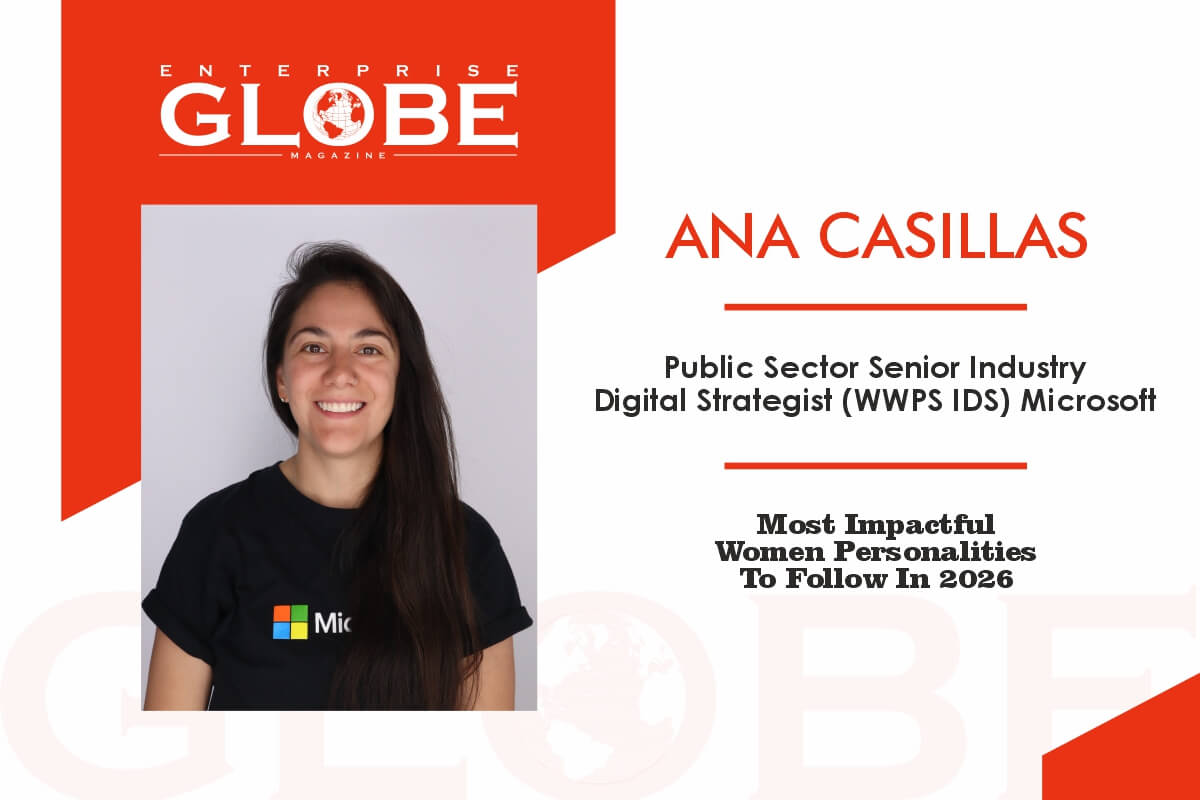
I am Ana Casillas, a public sector technology and digital strategy leader at Microsoft, based in Mexico City. In my current role as an Industry Advisor and Public Sector Industry Digital Strategist, I partner with government organizations and the teams that serve them to accelerate digital transformation with a clear and deliberate focus on measurable public value. My work sits at the intersection of technology, policy, and mission-driven outcomes, where the stakes are high and the responsibility to citizens is paramount.
My responsibilities span executive advisory, strategic visioning, and enabling teams to translate complex policy and operational priorities into actionable, sustainable technology roadmaps. In practice, this means working closely with senior government leaders, frontline teams, and ecosystem partners to align ambition with execution. I focus not only on what is technologically possible, but on what is responsible, secure, and meaningful within the realities of public sector governance, compliance, and trust.
A significant portion of my work concentrates on public safety and justice. In these domains, I collaborate with stakeholders across agencies to modernize service delivery, strengthen institutional trust, and improve outcomes through the secure and responsible use of cloud and artificial intelligence. These environments demand rigor, transparency, and ethical clarity. Decisions made in these contexts affect not only systems, but lives shaping access to safety, justice, and equitable treatment under the law.
In parallel, I invest deeply in building repeatable and scalable approaches to transformation. This includes designing workshops, innovation sessions, and partner-enabled solutions that can be adapted across regions and institutional contexts. Scalability in the public sector, however, cannot come at the expense of sovereignty, compliance, or mission requirements. My leadership approach emphasizes flexibility within strong guardrails ensuring solutions respect local realities while enabling long-term impact.
My journey into leadership was inspired by a fundamental conviction: technology should serve people. In the public sector, when implemented responsibly, technology has the power to improve lives at scale. Early in my career, I gravitated toward roles where mission and outcomes mattered as much as performance environments in which decisions had direct consequences for citizens’ access to healthcare, safety, and justice. These formative experiences shaped a leadership philosophy grounded in purpose, empathy, and accountability.
Professionally, my background across healthcare and consulting prepared me to operate comfortably at the intersection of business and technology. I learned how to align diverse stakeholders, clarify tradeoffs, and move deliberately from strategy to execution. These experiences reinforced an essential lesson: leadership is not a title or position. It is the discipline of creating clarity, building trust, and enabling others to deliver impact especially in complex, multi-party environments where progress depends on collaboration rather than authority.
Over time, I came to understand that effective leadership in the public sector requires fluency in multiple languages: the language of policy, the language of operations, and the language of technology. Leaders must translate between these domains with precision and empathy, ensuring that intent becomes execution without distortion. This translational capability has become one of my core strengths.
One defining challenge in my leadership journey has been aligning diverse stakeholders often across agencies, partners, and technical teams around a unified transformation strategy. Public sector environments introduce additional complexity: strong governance structures, competing mandates, budgetary constraints, and legacy systems that are deeply embedded in daily operations.
In these moments, I learned that leadership begins with listening. Before proposing solutions, it is essential to understand concerns, constraints, and success metrics from multiple perspectives. By validating stakeholder experiences and building a shared language around outcomes, leaders can create alignment that is durable rather than superficial. Only then can technology become an enabler rather than a source of friction.
Another defining realization has been that modernization is as much about culture and adoption as it is about architecture. Even the most advanced technical solutions will fail without effective change management, user enablement, and clear accountability. These lessons reinforced my commitment to communicate simply, anticipate risks early, and lead with transparency. When teams feel informed, respected, and empowered, they are more willing to navigate uncertainty and commit to difficult decisions.
As I reflect on leadership in 2026, I define it as the ability to create the conditions for others to succeed amid complexity, rapid change, and heightened expectations around trust, equity, and responsibility. This is particularly true as artificial intelligence becomes more central to public sector decision-making and operations. Leadership today requires clarity of purpose, strong ethical judgment, and the capacity to translate innovation into safe, inclusive, real-world outcomes.
My perspective has evolved from focusing primarily on execution to emphasizing systems. Sustainable impact depends on the culture, governance, partnerships, and learning loops that surround any initiative. I have come to value leaders who build durable alignment, invest in capability development, and model integrity leaders who can simplify complexity, invite diverse perspectives, and move teams from intention to measurable progress without losing sight of people.
Three core values guide my decision-making and leadership style: service, integrity, and inclusion.
Service means anchoring decisions in outcomes that matter to citizens and frontline public servants not solely in what is technically feasible. Integrity means prioritizing long-term trust over short-term wins, being transparent about risks and constraints, and ensuring decisions withstand public scrutiny. Inclusion means designing processes where diverse voices shape direction, recognizing that stronger strategies and more resilient execution emerge from varied perspectives.
Operationally, these values shape how I lead engagements. I clarify objectives early, promote collaborative problem-solving, and advocate for responsible innovation grounded in strong security and governance. I strive to lead with empathy while maintaining high standards supporting teams, asking critical questions, and making decisions aligned with mission, compliance, and measurable impact.
My leadership perspective is shaped by working across cultures, industries, and public sector realities particularly across the Americas, where constraints and priorities vary widely, yet citizens’ expectations remain consistently high. This exposure allows me to translate effectively between executive intent, operational needs, and technical delivery, enabling stakeholders to align quickly and move forward with confidence.
I also bring strength in narrative and communication. Simplifying complexity into clear decisions and shared direction is essential in public safety and justice contexts, where innovation must be balanced carefully with privacy, security, and fairness. Additionally, I bring a partner-first mind-set, recognizing that sustainable public value often requires an ecosystem approach combining government vision, Microsoft capabilities, and specialized partners to deliver impact responsibly and at scale.
Supporting emerging leaders is a core responsibility I take seriously. I create real opportunities for ownership by encouraging individuals to lead meetings, shape strategy artifacts, and present outcomes to senior stakeholders. Empowerment, in my view, is not abstract encouragement; it is structured development supported by clear expectations, coaching, and feedback tied to real work.
I focus on helping emerging leaders build three critical capabilities: strategic clarity, stakeholder influence, and disciplined execution. I also normalize learning as part of performance. By encouraging curiosity, experimentation, and iteration without fear of judgment, teams develop resilience and confidence. This approach is especially important in the AI era, where adaptability, ethics, and continuous learning define long-term leadership effectiveness.
Mentorship has been essential in my own journey, providing both perspective and acceleration. Mentors helped me navigate ambiguity, recognize my strengths, and align decisions with my values and long-term trajectory. I now pay this forward by mentoring intentionally listening deeply, helping others build their leadership narrative, and translating feedback into actionable development plans. I also sponsor talent by creating visibility and access to opportunities where growth can occur.
I build inclusive cultures by embedding inclusion into everyday operating rhythms not as a statement, but as a practice. This includes accommodating different communication styles, ensuring quieter voices are heard, and creating psychological safety so risks can be surfaced and disagreements expressed respectfully. Inclusion is also about fairness in opportunity: who receives visibility, stretch assignments, and coaching.
In my work, inclusion is reinforced through how I lead cross-functional collaboration. I define shared goals, clarify roles, and establish norms that value learning and accountability. I also advocate for inclusive design in public sector solutions, recognizing that equity is reflected not only internally but in citizen experiences. When we build with accessibility, security, and responsible AI principles, technology becomes a force that expands opportunity rather than reinforcing gaps.
The most significant leadership lesson I have learned is that trust is the most valuable currency. In high-stake environments like public safety and justice, stakeholders will not commit to change unless they trust both the intent and the process. Trust is earned through clarity, consistency, and care by communicating transparently, listening actively, and delivering reliably, especially on difficult commitments.
If I could advise my younger self, I would say: do not wait for permission to lead. Prepare thoroughly, speak with clarity, and step forward with confidence. Early in my career, I underestimated the influence I could have without a formal title. Experience taught me that credibility comes from the quality of thinking, consistency of execution, and the ability to elevate others.
I would also remind myself to be patient with the pace of meaningful change. Public sector transformation requires persistence, coalition building, and resilience. If the intent is service and the methods are ethical, progress though sometimes slow will compound. Values-based leadership creates impact that endures beyond any single initiative or role.