Huawei and Anghami have furthered their ecosystem alliance in a bid to improve music-streaming experiences across smartphones, wearables, and even in-car systems across the Middle East and Africa.
In the collaboration, integration becomes frictionless, whereby users of different Huawei devices will access Anghami through one touch.
Both companies want to provide localized, personalized, and device-agnostic digital entertainment for regional audiences.
The Huawei-Anghami partnership has grown significantly over the years, from a simple app distribution agreement to a sophisticated cross-device ecosystem integration. Initially, their relationship began when Anghami joined Huawei’s AppGallery, allowing users in the region to download the music-streaming service natively. The collaboration continued to expand as both companies saw increasing demand for device-agnostic entertainment solutions.
The launch of the Huawei wearables-dedicated smartwatch app was one of the major milestones of Anghami. This granted users direct access to music streaming from the wrist, which was considered among the early advancements available in the region. Smartwatch integration allows users to browse playlists, control playback, and leverage other user-friendly music interfaces that cater to fitness and mobility scenarios.
As Huawei continued its expansion of the HarmonyOS ecosystem, so did the partnership deepen. With the advent of newer models of smartwatches and updated operating systems, Anghami optimized the performance of its application toward smoother operations and richer functionality. This reinforced Huawei’s strategy of promoting an interconnected smart-device lifestyle.
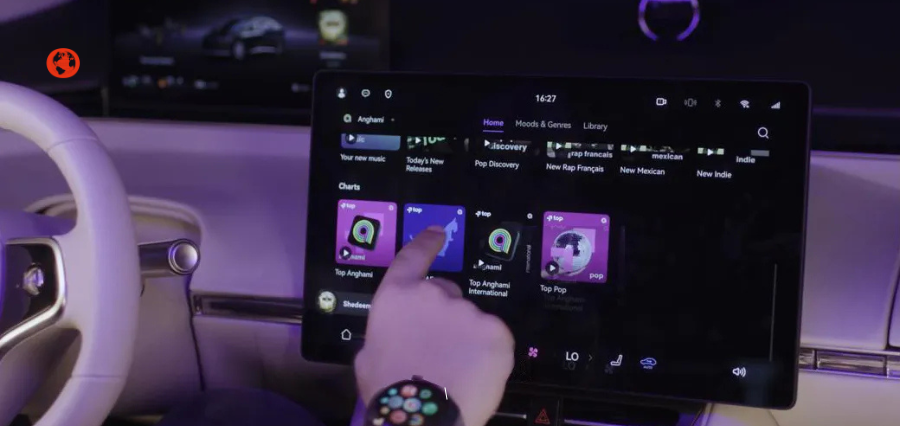
A further milestone was reached when the companies expanded into automotive. Anghami’s availability in Huawei’s in-car system enables drivers to access a trusted regional music catalog within the vehicle infotainment environment. This development falls in line with global trends of connected cars becoming an extension of the smart-device ecosystem. On its part, Huawei made the move as a strategic step in strengthening its foothold within the automotive technology domain. As for Anghami, it was about an opportunity to reach users with music in yet another everyday environment.
Anghami’s strong competitive advantage therefore is its wide Arabic and international music catalog intended to meet the MENA user’s cultural and linguistic tastes and preferences. Now, combining this with Huawei’s broad hardware distribution across MEA creates a powerful synergy: culturally rich content delivered through advanced connected-device technology.
This broader strategy reflects a shift in the digital entertainment industry, where streaming services increasingly collaborate with hardware manufacturers to create frictionless experiences across lifestyle touch points. Huawei seeks to further establish its position as a leader in digital ecosystems, while Anghami continues to improve user accessibility and engagement. In all, the alliance shows how both companies are changing to meet today’s consumer expectations by integrating music into every aspect of the user’s daily life, from home to workouts and even on the road.