
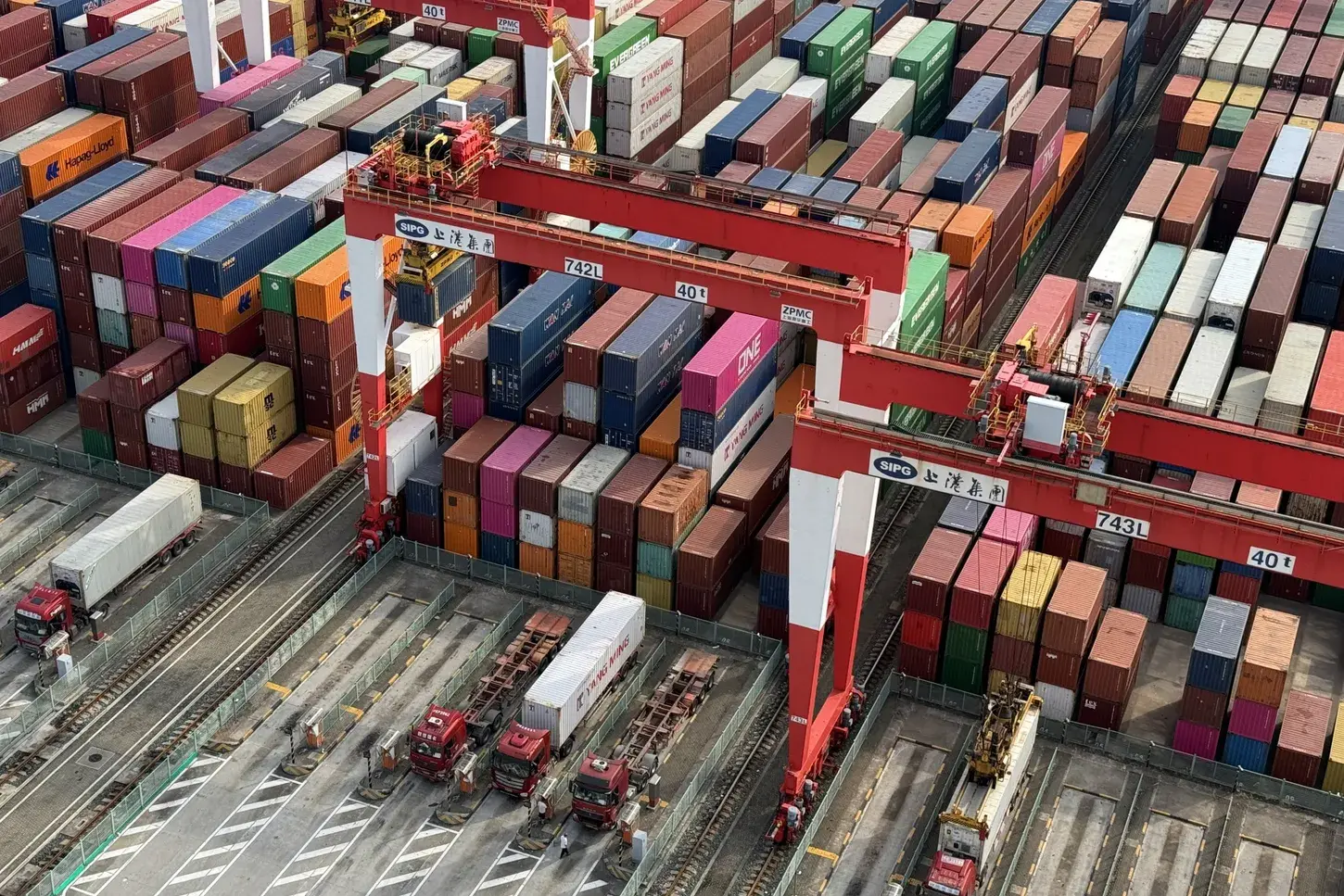
China’s $112 Billion Cargo Gap Signals Record US Tariff Evasion — What It Means for Global Trade
Source Credit: Bloomberg
A Record Trade Discrepancy Raises Red Flags
New trade data reveals a jaw-dropping $112 billion gap between what China reports exporting to the United States and what US Customs says actually arrived last year suggesting an unprecedented level of tariff evasion linked to the US–China trade war.
For American manufacturers and importers operating above board, the implications are profound: non-compliant competitors undercutting prices while compliant firms shoulder the economic burden.
What Is the Cargo Gap, and Why It Matters
The cargo gap refers to a sizable difference between export and import figures reported by trading partners. In this case:
- Chinese statistics show significantly more goods shipped to the US
- US Customs records fewer entries and lower values of imports
Economists and trade analysts see this divergence as a strong indicator of tariff avoidance and trade misclassification, rather than mere statistical noise.
Put simply: as much as a quarter of what China claims it shipped last year may have slipped under the tariff radar.
How Tariff Evasion Works
Experts interviewed in the reporting say fraudsters are exploiting systemic loopholes to avoid duties:
1. Phantom Importers
Using shell companies or non-resident entities as the official “importer of record,” goods clear customs without tariffs actually being paid. These shell firms often disappear soon after transactions conclude.
2. Misclassification and Undervaluation
Goods are deliberately misclassified or under-reported in value to reduce duty obligations. Advertisements promising ultra-low shipping rates in some cases as little as $0.70 per kilogram are red flags for fraud.
3. Exploiting Poor Oversight
US policies allow companies without physical US presence to act as official importers, creating opportunities for offshore entities to exploit tariff loopholes. Proposed reforms aim to tighten these requirements, but progress has stalled.
Who Pays the Price
While evaders benefit from lower costs, compliant companies. especially American manufacturers bear the brunt:
- They pay full duties on imports
- Face unfair pricing competition
- Struggle to compete with underpriced goods flooding online marketplaces
- See market share eroded by rivals who bypass tariff costs
One business owner cited in the reporting described tariff cheating as “much, much worse than tariffs,” because it undercuts fair competition at a structural level.
Government Enforcement and Its Limits
The US isn’t blind to the problem. Measures taken include:
- An interagency trade fraud task force launched in 2025
- A whistleblower program targeting evaders
- AI-powered monitoring contracts to detect suspicious activity before cargo clears ports
However, authorities struggle to reach shell companies that vanish or operate outside US jurisdiction, limiting enforcement effectiveness.
Policy Pressure and Proposed Reforms
Lawmakers have introduced bills aiming to:
- Increase asset requirements for foreign importers
- Eliminate valuation rules such as the “first sale” rule, which critics say enables under-reporting
Yet political momentum remains slow, leaving compliant businesses caught between trade policy and enforcement shortfalls.
The striking $112 billion cargo gap isn’t just a statistical oddity. it reflects growing structural challenges in global trade enforcement.
For businesses, the story underscores a new reality: tariff policies alone aren’t enough without robust compliance systems, transparent supply chains, and international cooperation.
Evasion undermines trade fairness, erodes domestic industry competitiveness, and raises questions about the effectiveness of protectionist policies without synchronized enforcement mechanisms.
Conclusion
China’s record cargo gap highlights that tariff evasion may have grown beyond sidelined compliance issues into a systemic challenge affecting global commerce.
For policymakers and enterprises a like, addressing this issue will require:
1.Stronger cross-border enforcement
2.Greater transparency in supply chains
3.Updated trade compliance frameworks
4.Political will to reform outdated import policies
The health of international trade depends not only on tariff levels, but on the integrity of the systems enforcing them.
Follow Enterprise Globe Magazine for expert analysis on global trade, policy shifts, and economic strategy in an increasingly interconnected world.