The AI-Driven Stress Cycle: How Technology Is Quietly Rewiring Our Minds
By Vaishnavi P | Enterprise Globe Magazine
When Convenience Turns Into Pressure
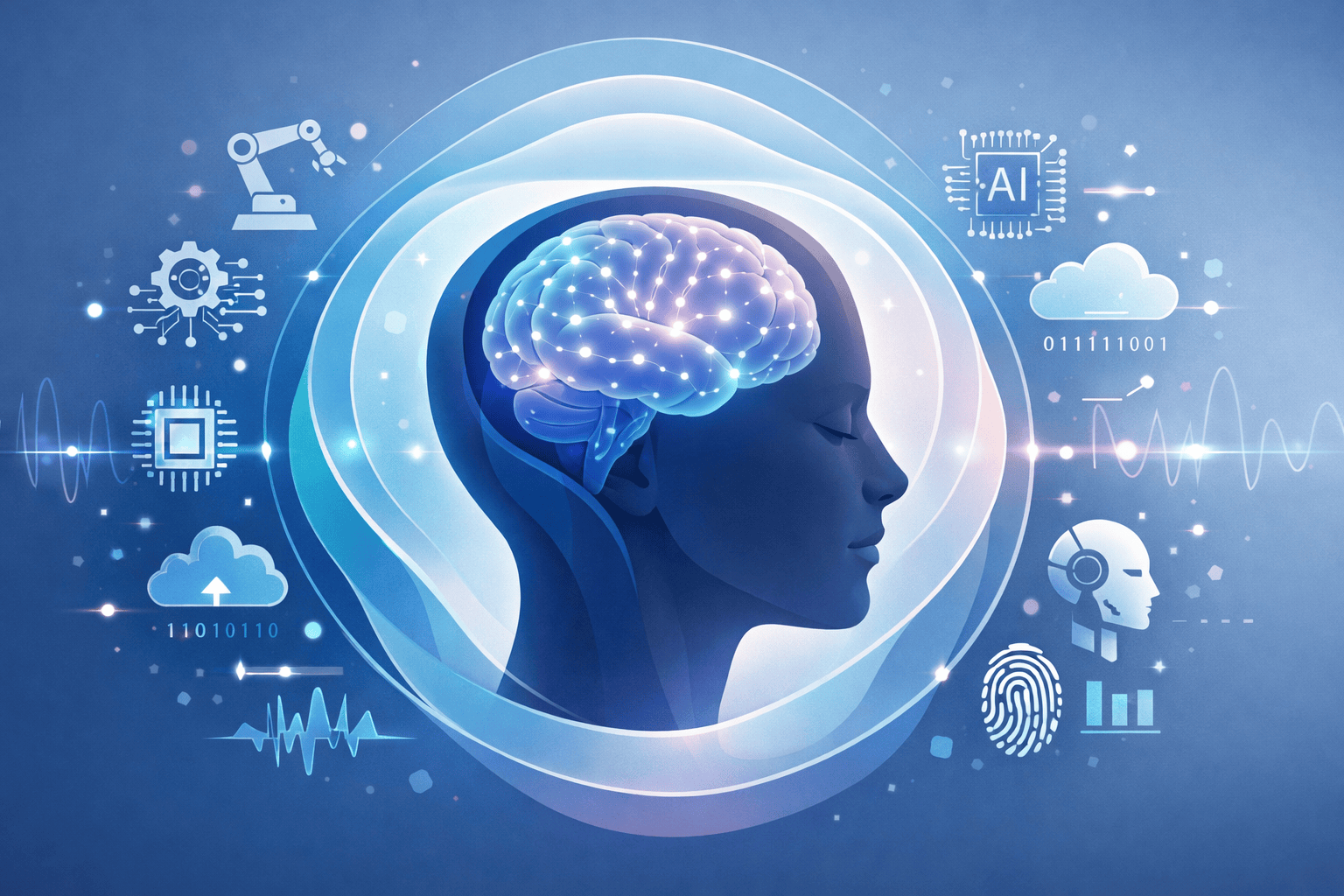
Artificial intelligence is everywhere organizing our schedules, recommending content, answering questions, and automating tasks. It promises efficiency and ease. Yet for many people, daily life feels more overwhelming, not less.
This contradiction has a name: the AI-driven stress cycle.
It’s not about AI being harmful by default. It’s about how constant digital intelligence, notifications, and optimization systems subtly reshape how our brains handle attention, urgency, and rest.
What Is the AI-Driven Stress Cycle?
The AI-driven stress cycle happens when intelligent systems continuously compete for your attention, pushing you into a state of permanent responsiveness.
Here’s how the cycle usually works:
- AI systems deliver constant prompts, alerts, and suggestions
- Your brain shifts into reactive mode
- Stress hormones increase as urgency feels constant
- Focus declines and mental fatigue sets in
- You rely even more on AI tools to cope
The result is a loop where technology designed to help ends up increasing mental load.
Why This Matters More Than Ever
Human attention evolved for depth, not constant interruption. AI systems, however, are optimized for speed, engagement, and real-time response.
Over time, this imbalance can affect:
- concentration and memory
- sleep quality
- emotional regulation
- decision-making
- long-term wellbeing
This isn’t limited to professionals or tech workers. Anyone using smartphones, apps, AI assistants, or algorithm-driven platforms can experience it.
AI Is Not the Problem—Unbounded Use Is
AI itself isn’t inherently stressful. In fact, when used intentionally, AI can:
- reduce cognitive load
- automate repetitive tasks
- simplify complex information
- improve planning and learning
The stress emerges when boundaries disappear and every interaction feels urgent, optimized, and endless.
Signs You’re Caught in the AI Stress Cycle
You may be experiencing it if:
- you feel compelled to check devices constantly
- silence or idle time feels uncomfortable
- your focus fragments quickly
- you struggle to “switch off” mentally
- you feel busy even when nothing urgent exists
These are not productivity failures—they’re attention overload signals.
How to Break the AI-Driven Stress Cycle
You don’t need to abandon AI. You need to change how you engage with it.
1. Move From Reactive to Intentional Use
Decide when and why you use AI tools instead of responding automatically.
Simple shift:
“I check when I choose” instead of “I react when notified.
2. Reduce Non-Essential Notifications
Every alert competes for cognitive energy. Silence what doesn’t serve a clear purpose.
Less noise = less stress.
3. Use AI to Filter, Not Flood
Let AI summarize, prioritize, and sort—rather than push more information toward you.
AI should shield your attention, not consume it.
4. Schedule Recovery Time
Mental recovery is not optional. Build screen-free or AI-free time into your day, especially before sleep.
Your nervous system needs breaks from constant stimulation.
5. Re-Anchor in Physical Reality
Movement, breathing, sunlight, and real-world interaction help reset stress responses that digital systems amplify.
Technology is virtual. Your body is not.
The Bigger Picture: Coexisting With Intelligent Systems
AI will continue to grow smarter, faster, and more integrated into daily life. The real challenge isn’t stopping AI—it’s learning how to coexist with it sustainably.
The people who thrive won’t be those who use AI the most.
They’ll be those who use it with awareness, boundaries, and intention.
Conclusion
The AI-driven stress cycle is subtle, widespread, and solvable.
By understanding how intelligent systems affect attention and stress—and by reclaiming control over how we engage with them AI can remain a powerful ally rather than a constant pressure.
Technology should support human wellbeing, not quietly erode it.
Follow Enterprise Globe Magazine for thoughtful insights on technology, wellbeing, and how humans can thrive in an AI-powered world.